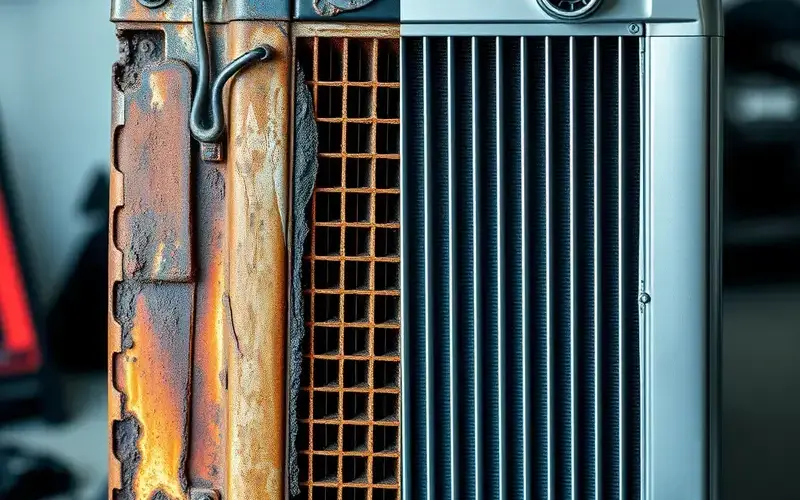
Don't wait for a breakdown. Watch for these warning signs that your cooling system is struggling...
Your radiator is the unsung hero of your engine, working tirelessly to prevent overheating. But like any component, it wears down over time. Here are five key signs that yours might need professional attention.
1. Rising Temperature Gauge: If your dashboard temperature gauge climbs higher than normal, your cooling system isn't dissipating heat effectively.
2. Coolant Leaks Under the Car: Puddles of green, orange, or pink fluid under your vehicle are a dead giveaway (pun intended) of a leak.
3. Discolored Coolant: If your coolant looks rusty, sludgy, or has particles in it, it needs a flush.
4. Strange Smells: A sweet smell inside the cabin could indicate a heater core leak, while a burning smell might mean coolant is leaking onto hot engine parts.
5. Frequent Overheating: If you find yourself pulling over to let the engine cool down regularly, stop driving it and call a mechanic immediately.
March 10, 2025 | Seasonal
Summer Driving: Keeping Your Cool
As temperatures rise, so does the strain on your vehicle's cooling system. Here is how to prepare...
Summer puts the biggest demand on your radiator. Stop-and-go traffic on a hot day is the perfect storm for overheating. Before you hit the road for that summer vacation, take these steps.
1. Check Coolant Levels: Ensure your radiator and overflow tank are full. Use the correct mix of coolant and water (usually 50/50).
2. Inspect Hoses: Feel the upper and lower radiator hoses. They should be firm but pliable. If they feel brittle, cracked, or soft, replace them.
3. Test Your AC: Run your AC to ensure it's blowing cold. If it's weak, your system might be overworked.
4. Park in Shade: Direct sunlight forces your cooling system to work overtime.
February 28, 2025 | Fuel Systems
Ethanol and Your Gas Tank
Modern fuel blends can be tough on older steel tanks. Here is what you need to know...
Ethanol-blended fuels (E10, E15) are common, but they can accelerate corrosion in steel fuel tanks, especially in classic cars that weren't designed for them.
The Problem: Ethanol is hygroscopic, meaning it absorbs moisture from the air. This water can separate and sit at the bottom of the tank, causing rust.
The Solution: For vehicles with steel tanks, consider using a fuel stabilizer with ethanol treatment, or switch to pure gasoline if available. If your tank is already rusted, a professional cleaning and internal coating can seal it against future moisture damage.